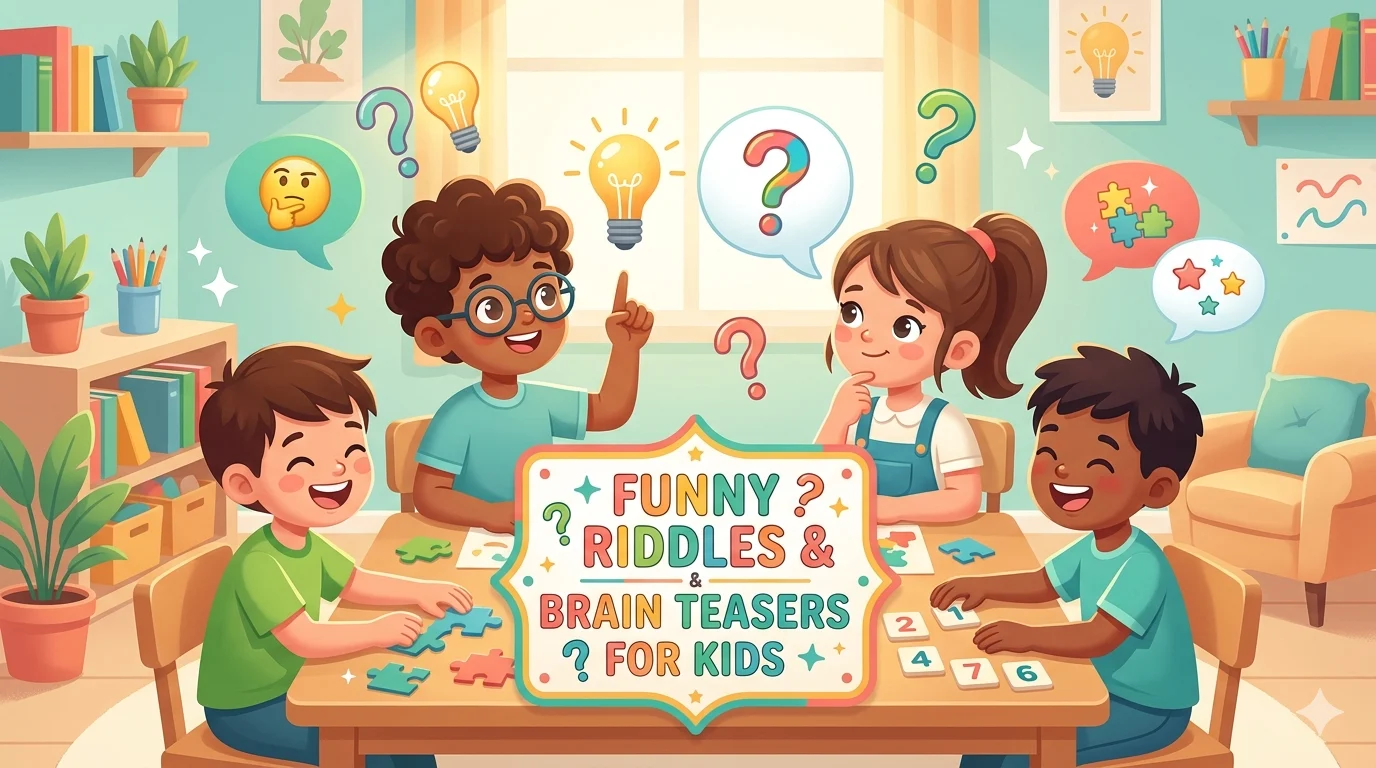
Want to make kids actually enjoy learning instead of getting bored? This 77+ riddles for kids PDF turns simple thinking into a fun, exciting challenge that keeps young minds curious, active, and fully engaged.
Instead of routine worksheets, these riddles are designed to spark creativity, improve logical thinking, and boost problem-solving skills in a playful way. Each question is short, simple, and carefully crafted so kids can understand easily and enjoy solving without pressure.
Perfect for parents, teachers, and homeschooling activities, this 77+ riddles for kids PDF is ideal for classroom learning, homework practice, or fun family time. It’s more than just a worksheet—it’s a smart way to build confidence, thinking power, and a lifelong love for learning.
Why Printable Riddle Worksheets Are Transforming Learning
Printable activity sheets have become a modern teaching tool because they are simple yet highly effective.
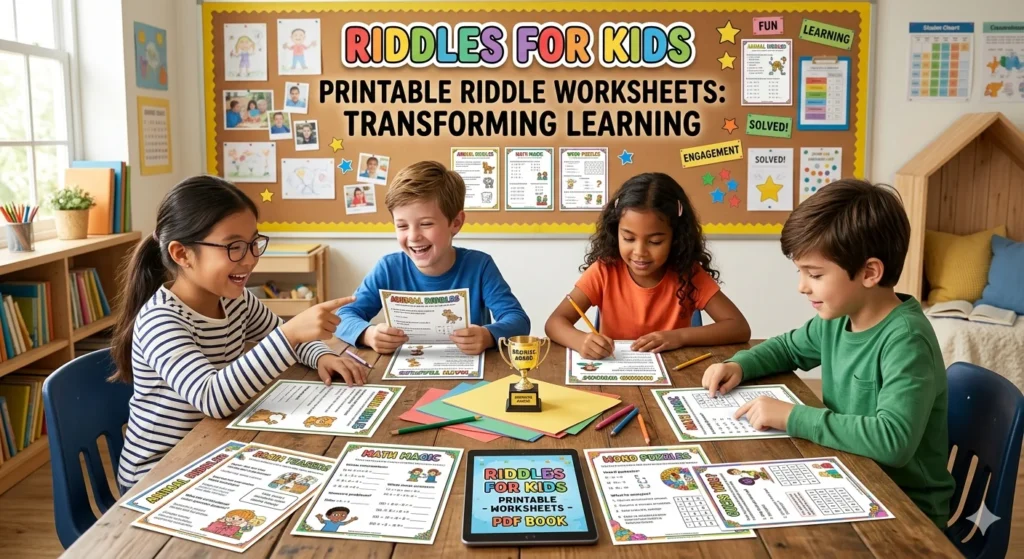
✔ Why they are widely used:
- Easy to print and reuse
- Works without internet or devices
- Encourages active thinking
- Suitable for classrooms and home learning
- Reduces passive screen time
💡 Educational insight: Children learn faster when they solve problems independently rather than memorizing answers.
How Riddles Improve Brain Development in Children
Riddles are more than entertainment — they are cognitive training exercises.
✔ Key mental benefits:
- Improves logical thinking
- Strengthens memory retention
- Enhances vocabulary understanding
- Builds attention to detail
- Encourages curiosity and exploration
💡 Psychology insight: When children actively solve problems, their brain forms stronger neural connections compared to passive reading.
Types of Kids Riddles for Different Learning Levels
Different riddles serve different learning purposes.
✔ Main categories:
1. Easy riddles
Simple questions that build confidence.
2. Funny riddles
Humor-based questions that increase engagement.
3. Tricky riddles
Logic-based puzzles requiring deeper thinking.
4. Math riddles
Number-based challenges for calculation skills.
5. Themed riddles
Animal, seasonal, and real-life concept puzzles.
💡 Mixing different types keeps children interested and prevents boredom.
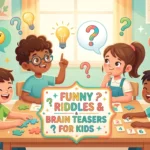
Funny Riddles That Make Learning Enjoyable
Humor is one of the strongest learning tools for children.
✔ Example riddles:
- What has hands but cannot clap? → Clock
- What gets wetter as it dries? → Towel
- What has a neck but no head? → Bottle
✔ Why they work:
- Reduce learning pressure
- Improve attention span
- Help children remember answers easily
💡 Insight: Positive emotions improve memory retention significantly in early education.
66+ Fun Math Riddles for Adults That Will Challenge Your Brain
Tricky Riddles That Strengthen Critical Thinking
These riddles are designed to slow down thinking and encourage deeper analysis.
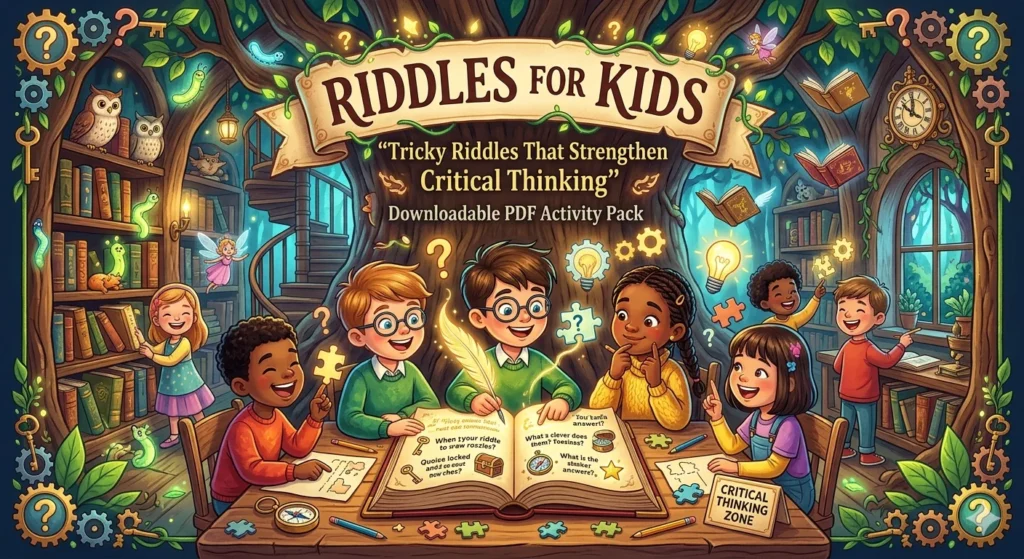
✔ Example:
- I speak without a mouth and hear without ears. What am I? → Echo
✔ Skills developed:
- Logical reasoning
- Pattern recognition
- Careful reading skills
💡 Teachers often use tricky puzzles as “thinking warm-ups” before lessons.
Math Riddles That Make Numbers Easy and Fun
Math becomes less intimidating when presented as puzzles.
✔ What they improve:
- Basic arithmetic skills
- Mental calculation speed
- Number confidence
- Pattern understanding
✔ Example:
- If a number doubled is 20, what is it? → 10
💡 Educational insight: Gamified math improves performance and reduces fear of numbers.
Printable Activity Sheets for Home and School Use
Printable worksheets are flexible learning tools used in different environments.
✔ Common uses:
- Classroom warm-up exercises
- Homework reinforcement
- Family quiz games
- Group competitions
💡 Tip: Laminated worksheets can be reused multiple times in classrooms.
Themed Riddles for Better Memory and Engagement
Children connect better when learning is linked to familiar themes.
✔ Popular themes:
- Animals (lion, elephant, panda)
- Seasons (rain, winter, rainbow)
- Festivals (Christmas, Diwali, holidays)
💡 Insight: Thematic learning increases memory recall because it connects with real-life experiences.
How to Use Riddles Effectively for Maximum Learning Results
Simply giving riddles is not enough — method matters.
✔ Best practices:
- Start lessons with 1 puzzle daily
- Encourage group discussion
- Mix difficulty levels
- Let children explain their answers
💡 Classroom insight: Interactive participation improves learning retention by up to 50%.
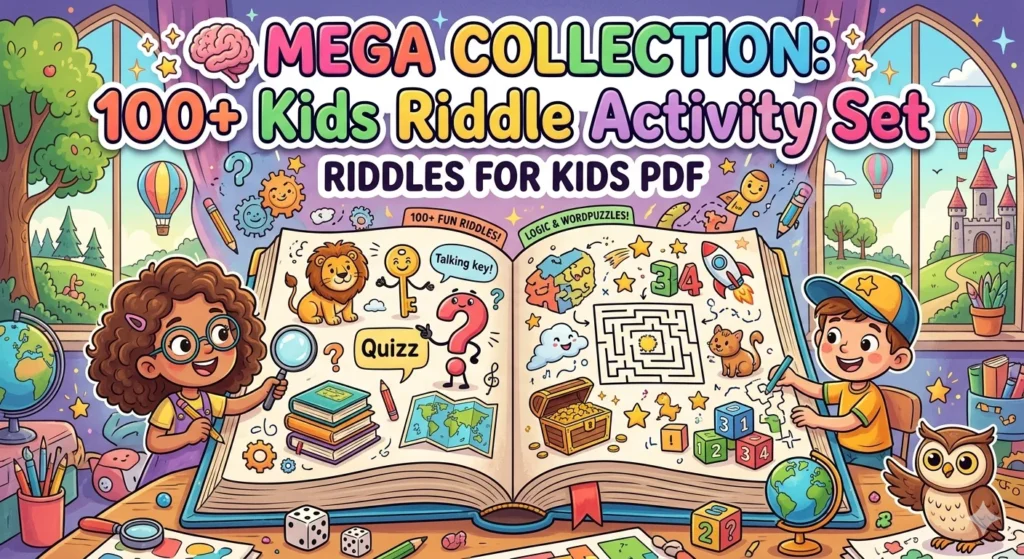
🧠 Mega Collection: 100+ Kids Riddle Activity Set
Below is a ready-to-use selection for worksheets and practice.
🟡 Easy Riddles
- What has a face but no eyes? → Clock
- What runs but never walks? → Water
- What has keys but no doors? → Piano
- What has a ring but no finger? → Phone
- What gets bigger when you remove something? → Hole
- What has hands but cannot touch? → Clock
- What is full of holes but holds water? → Sponge
- What goes up but never comes down? → Age
- What has one eye but cannot see? → Needle
- What has legs but doesn’t walk? → Table
🧩 Thinking Riddles
- I grow but I am not alive. → Fire
- I travel but never move. → Stamp
- I speak without a mouth. → Echo
- I become bigger when you take away. → Hole
- I have cities but no houses. → Map
🔢 Math Riddles
- 5 + 5 = ? → 10
- Double of 8 = ? → 16
- Half of 100 = ? → 50
- 9 – 3 = ? → 6
- 4 × 2 = ? → 8
🐾 Animal Riddles
- King of jungle → Lion
- Big animal with trunk → Elephant
- Bamboo eater → Panda
- Sea jumper → Dolphin
- Farm animal that says moo → Cow
🎄 Seasonal Riddles
- Comes in winter with gifts → Santa
- White falling flakes → Snow
- Festival of lights → Diwali
- Color after rain → Rainbow
- December celebration tree → Christmas
FAQ
1. What is a riddles for kids PDF used for?
It is used to help children learn through puzzles that improve thinking, memory, and creativity in a fun way.
2. Are printable riddles good for classroom teaching?
Yes, teachers use them as warm-up exercises, quizzes, and group learning activities to increase engagement.
3. What age group is best for riddles?
Riddles can be used for ages 4 to 12, with difficulty adjusted according to age level.
4. Do riddles improve intelligence?
They help develop logical thinking, problem-solving skills, and memory, which support overall cognitive growth.
5. Can riddles be used at home?
Yes, parents often use them for fun learning, family games, and reducing screen time.
Conclusion
Learning becomes more effective when children are actively involved instead of passively memorizing. Puzzle-based worksheets help children think independently, stay curious, and enjoy the learning process.
Whether used in classrooms or at home, these activities create a balance between education and fun. Over time, they help build stronger thinking skills, better focus, and improved confidence in problem-solving.
The real strength of this learning method lies in one simple idea — when children enjoy learning, they learn faster and remember longer.
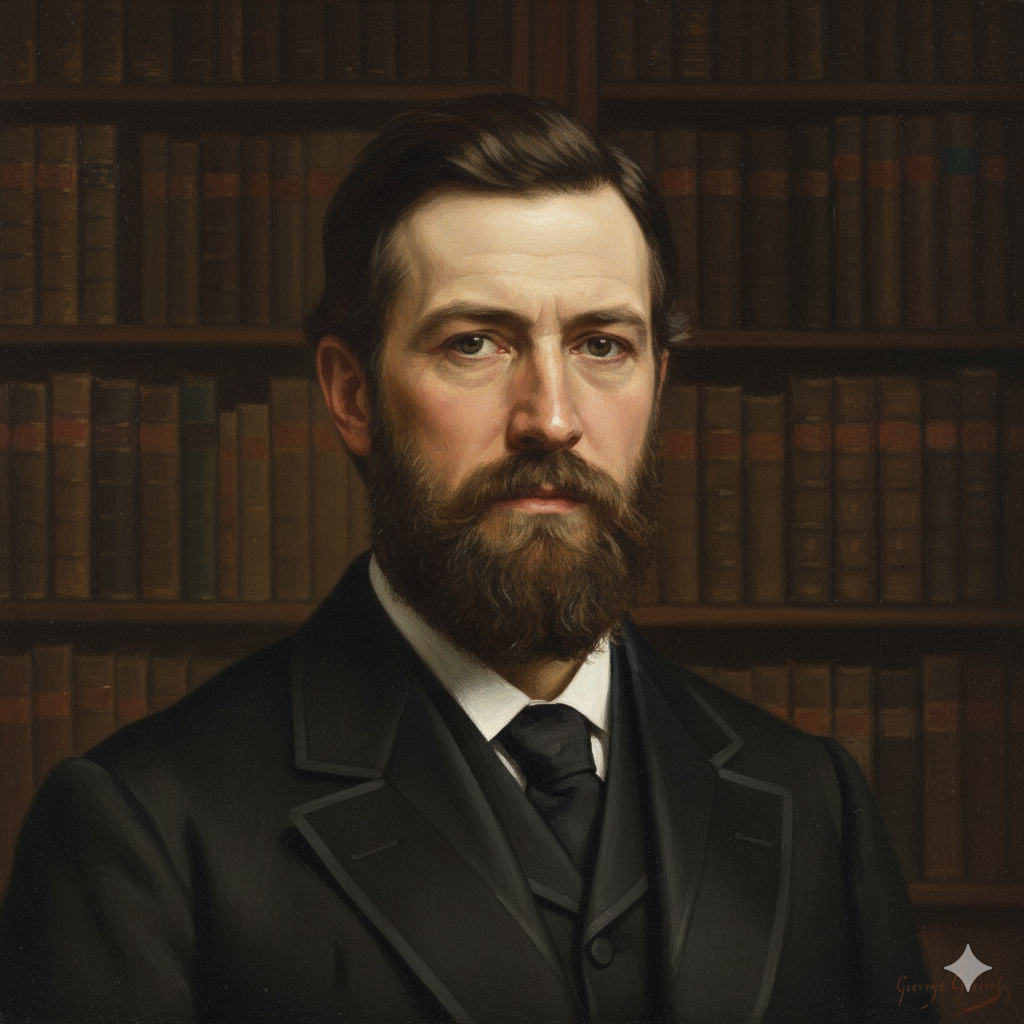
George Gissing was an English novelist of the late 19th century, famous for realistic novels about poverty, social struggle, and the harsh life of the urban poor.